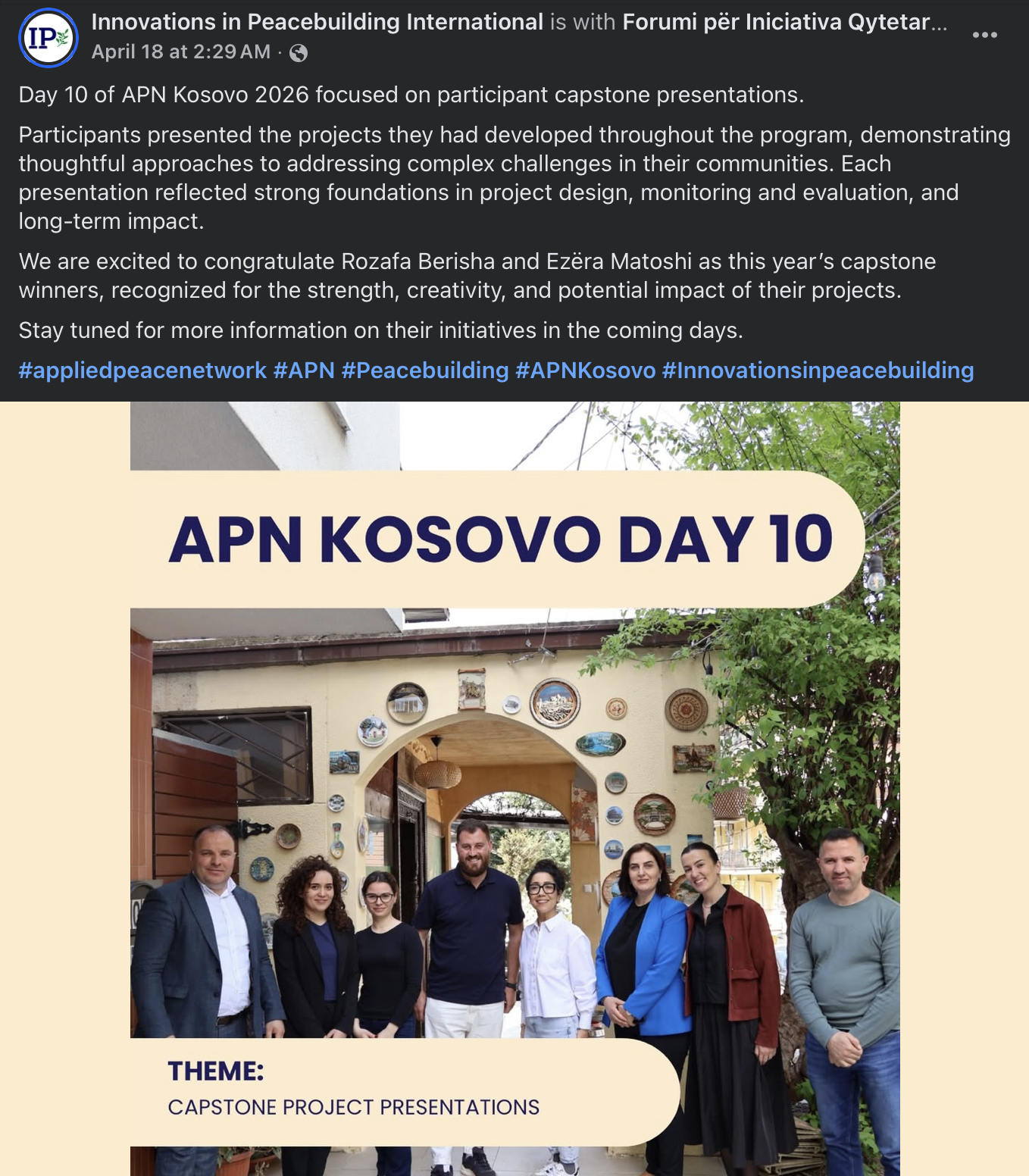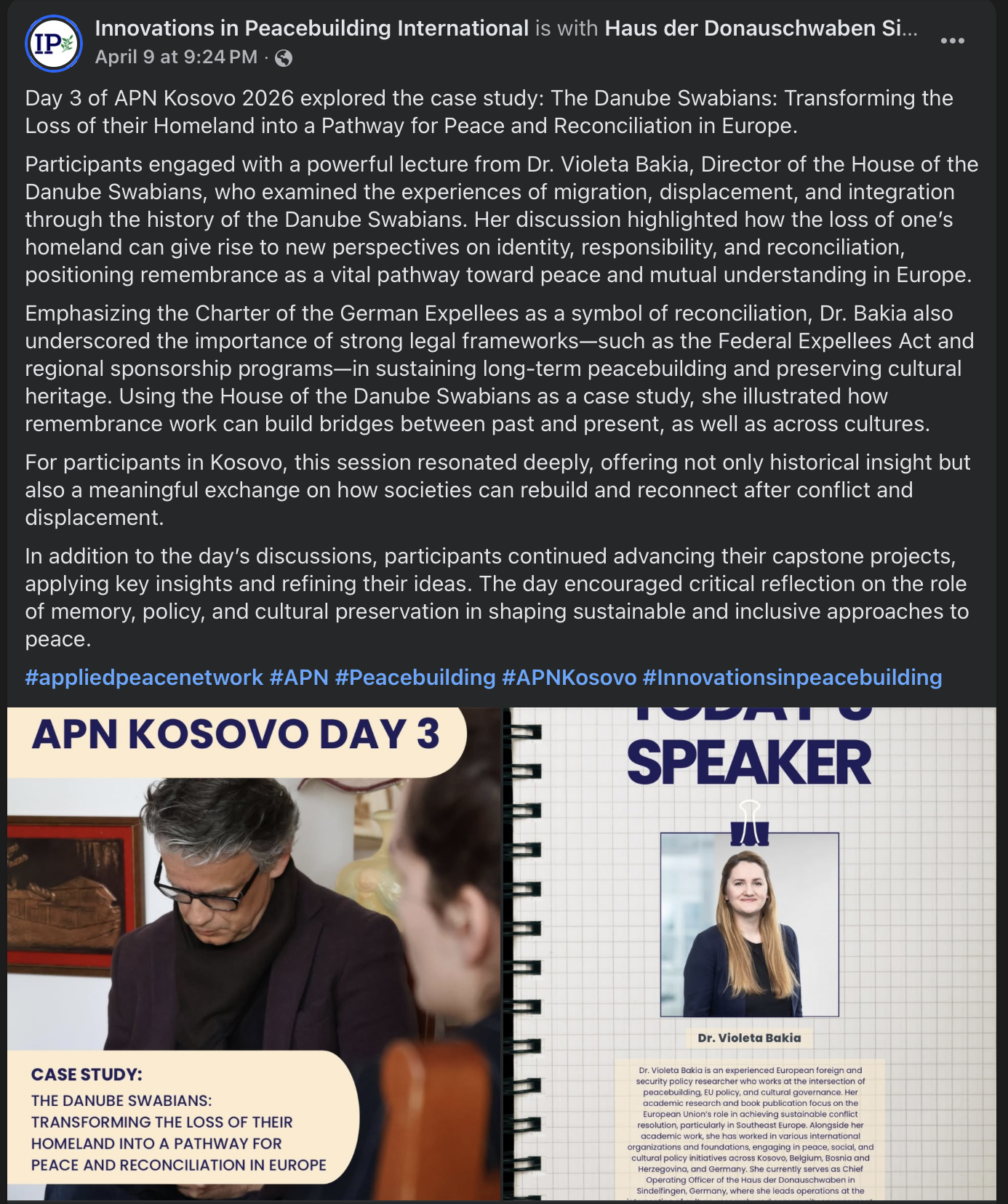
Day 3 of APN Kosovo 2026
Day 3 of APN Kosovo 2026 explored the case study: The Danube Swabians: Transforming the Loss of their Homeland into a Pathway for Peace and Reconciliation in Europe.Participants engaged with a powerful lecture from Dr. Violeta Bakia, Director of the House of the Danube Swabians, who examined the experiences of migration, displacement, and integration through the history of the Danube Swabians. Her discussion highlighted how the loss of one’s homeland can give rise to new perspectives on identity, responsibility, and reconciliation, positioning remembrance as a vital pathway toward peace and mutual understanding in Europe.Emphasizing the Charter of the German Expellees as a symbol of reconciliation, Dr. Bakia also underscored the importance of strong legal frameworks—such as the Federal Expellees Act and regional sponsorship programs—in sustaining long-term peacebuilding and preserving cultural heritage. Using the House of the Danube Swabians as a case study, she illustrated how remembrance work can build bridges between past and present, as well as across cultures.For participants in Kosovo, this session resonated deeply, offering not only historical insight but also a meaningful exchange on how societies can rebuild and reconnect after conflict and displacement.In addition to the day’s discussions, participants continued advancing their capstone projects, applying key insights and refining their ideas. The day encouraged critical reflection on the role of memory, policy, and cultural preservation in shaping sustainable and inclusive approaches to peace.
Artikuj të ngjashëm
16/07/2026
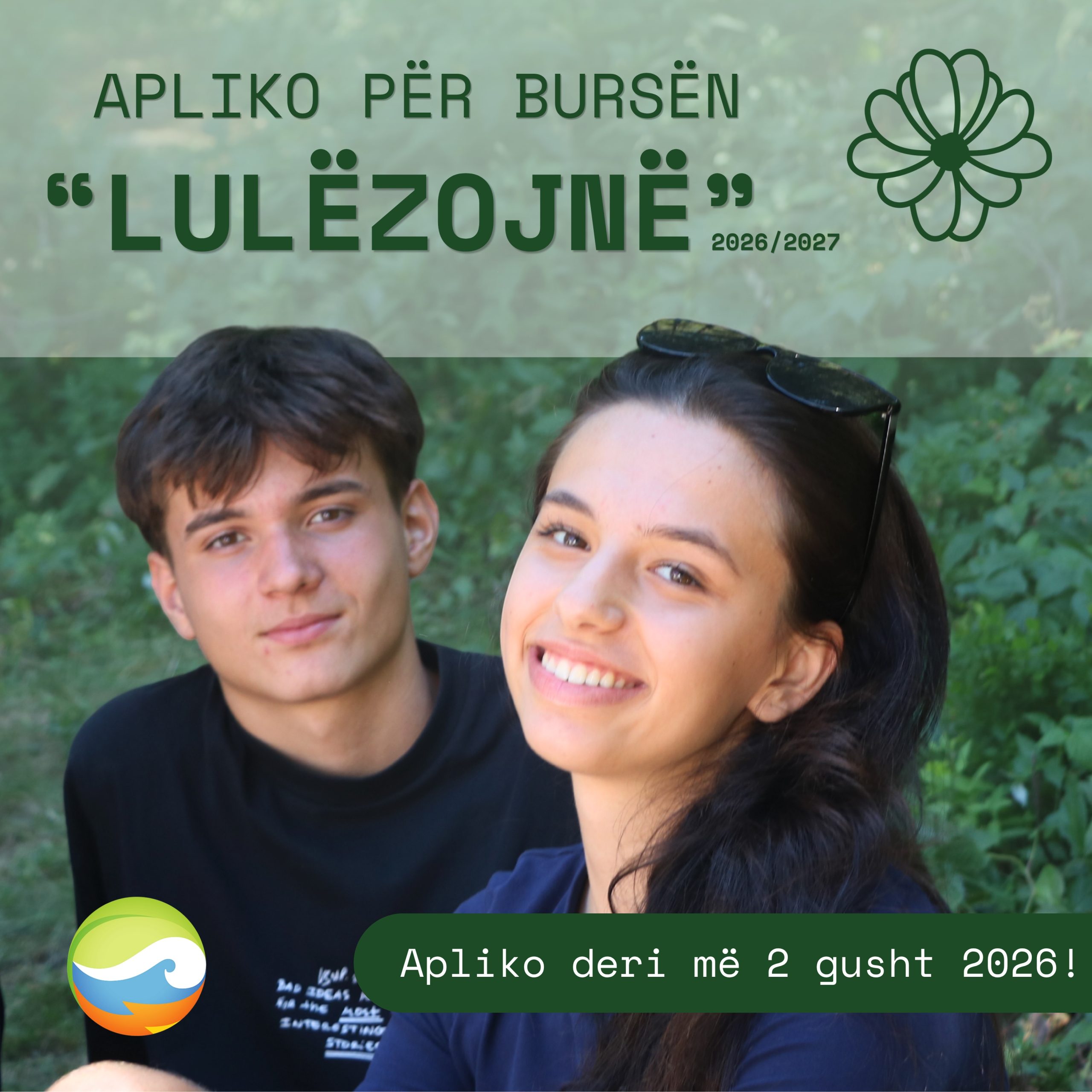
Koha që të LULËZOSH ka ardhur sërish! Apliko për LINKUBursën “LULËZOJNË” 2026/27!
Shiko artikullin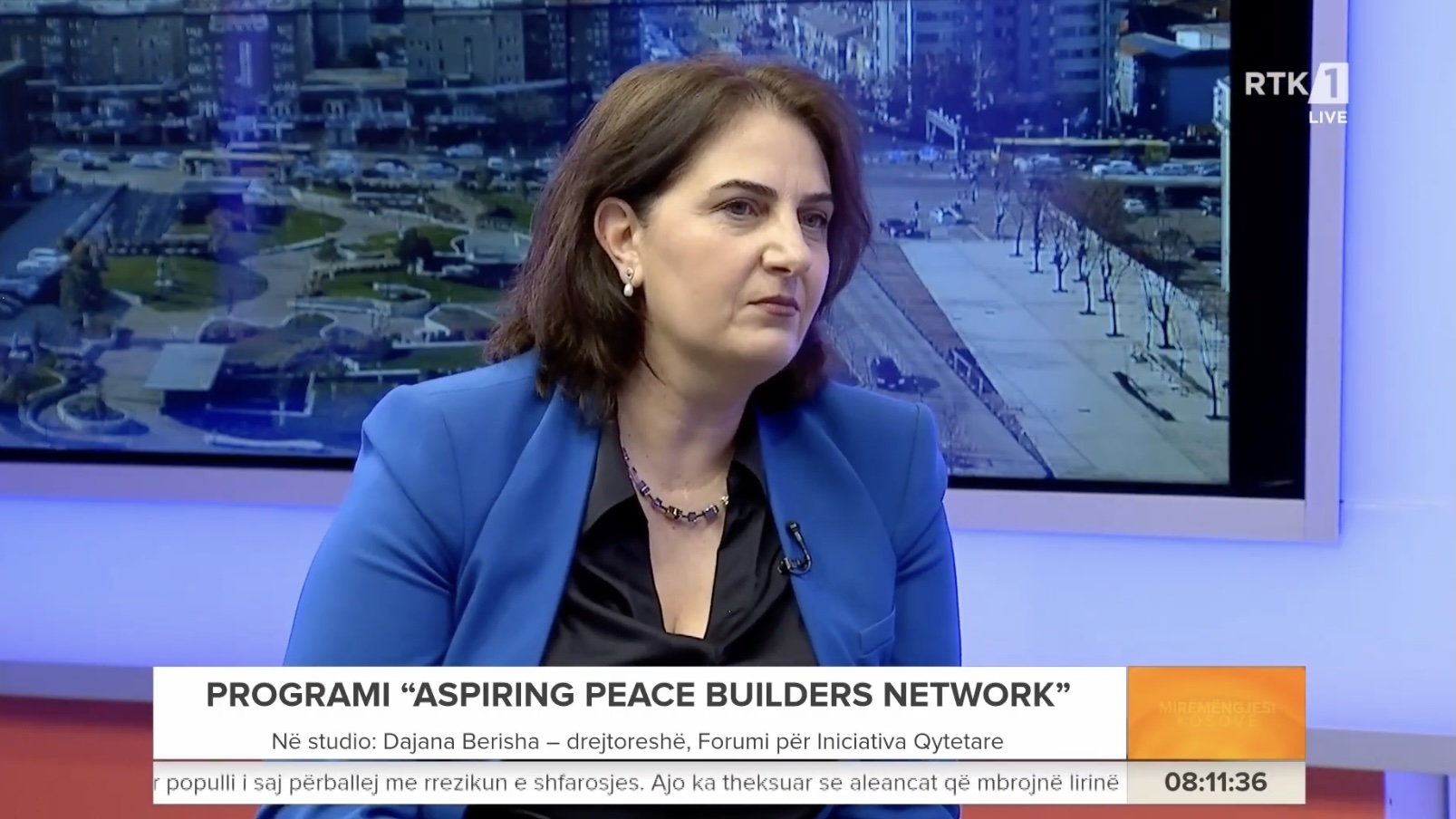
15/07/2026
Përmes paraqitjeve në mediat televizive, FIQ kontribuon në debatin publik duke ofruar analiza dhe perspektiva mbi zgjedhjet, politiket energjetike, ndërtimin e paqes dhe çështjet aktuale që prekin shoqërinë e Kosovës.
Shiko artikullin